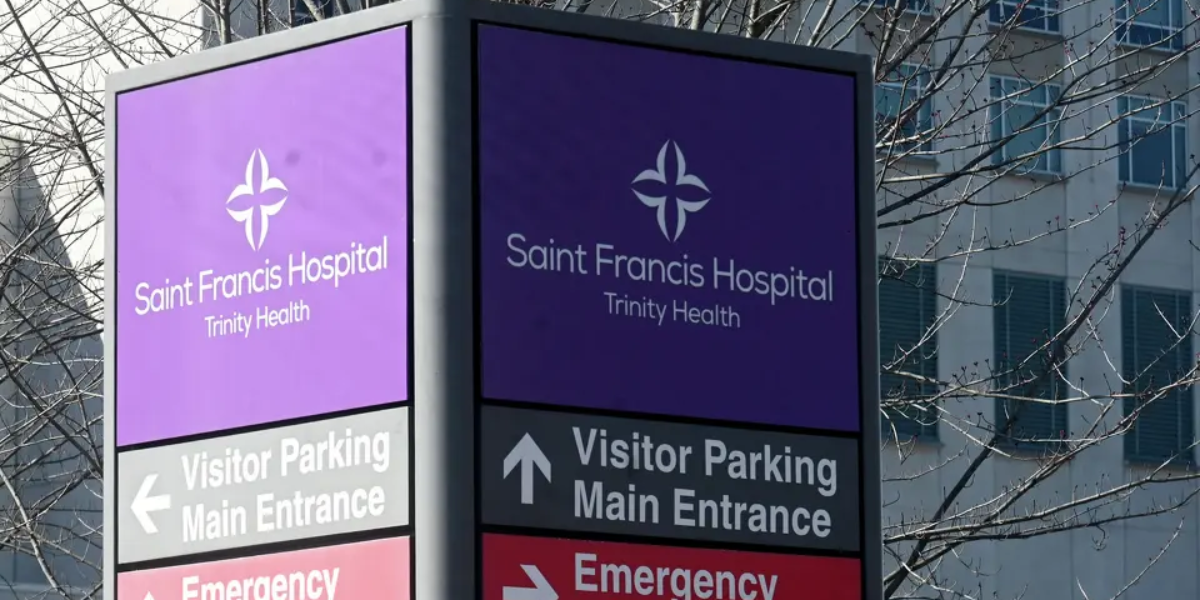
A Connecticut mother says a hospital’s delay in performing an emergency C-section cost her newborn son his life, according to a lawsuit filed last week against Saint Francis Hospital in Hartford and its operator, Trinity Health Medical Group.
Cheyenne Seymour was 35 weeks pregnant with twins when she arrived at the hospital on the night of April 28, 2025, reporting pelvic pain, pressure, and fluid leakage. After being evaluated through fetal monitoring, ultrasound, and physical exams, she was discharged around 1:24 a.m. and told to manage her symptoms at home with Tylenol, heating pads, and a belly binder, the suit states.
The complaint alleges the hospital failed to recognize troubling signs on her fetal monitoring results and declined to admit her despite multiple concerning findings.
Just two hours after being sent home, Seymour returned with heavy vaginal bleeding and worsening pelvic discomfort. She was soon diagnosed with a placental abruption, a serious condition requiring an emergency C-section. But according to the lawsuit, staff opted to wait until an operating room became available rather than treating it as an immediate emergency.
The procedure wasn’t performed until nearly 20 hours after her return, and almost 27 hours after her initial visit. Her son, Matthias, was born weighing just over five pounds, with no muscle tone and no respiratory effort. He was resuscitated, intubated, and rushed to the neonatal intensive care unit, where he was treated for multiple severe conditions including oxygen deprivation, organ-threatening complications, and internal bleeding.
Despite continued medical intervention, Matthias’s condition deteriorated. Two days after birth, he went into cardiac distress, and resuscitation efforts failed. He was pronounced dead early that morning.
Seymour’s lawsuit accuses the hospital of negligence, claiming staff missed critical warning signs, mishandled the induction process, and failed to act quickly enough once the abruption was identified. The suit also alleges she wasn’t properly informed of the risks involved in continuing labor under those conditions.
A hospital representative declined to comment, citing pending litigation.