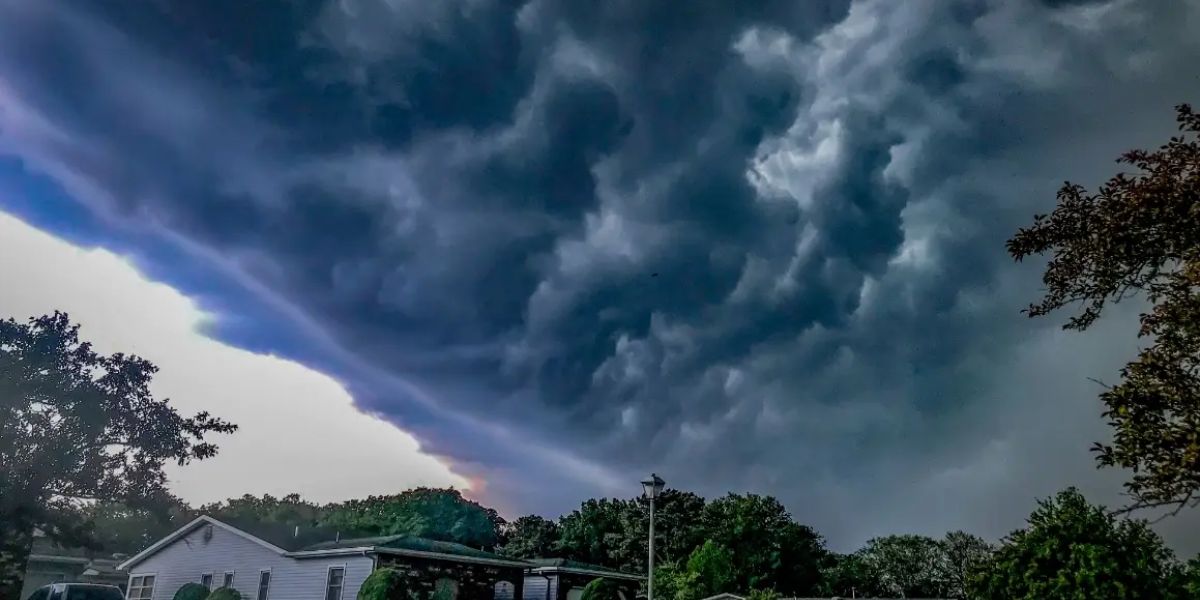
DULUTH, MINNESOTA — Air quality across the Midwest and Great Lakes region deteriorated sharply Wednesday, with Duluth recording an Air Quality Index reading of 250 — a level classified as “very unhealthy” — as a combination of drifting Canadian wildfire smoke and intense summer heat pushed pollution levels into dangerous territory across multiple states and provinces.
Duluth, Northern Wisconsin Bear the Brunt
According to National Weather Service air quality monitoring, the worst conditions Wednesday were concentrated directly over Duluth and extended across northern Wisconsin toward Green Bay, with readings climbing as high as 301 in isolated pockets. Officials say this band represents the most polluted air forecast anywhere in the region this week, with visibility reduced and a persistent haze reported by residents throughout the day.
Unhealthy Air Spreads Into Chicago, Detroit and Toronto
The smoke didn’t stay confined to Minnesota. A wide corridor stretching from Milwaukee and Chicago through Saginaw, Lansing, Detroit, Toledo and Cleveland — and crossing the border into Hamilton and Toronto, Ontario — registered AQI levels between 151 and 201, a range health officials classify as unhealthy for the general population, not just at-risk groups.
Moderate but Widespread Impact Reaches Deeper Into the Region
Beyond the hardest-hit zones, a much larger stretch of the Midwest — including Cedar Rapids, Peoria, Indianapolis, Columbus, Cincinnati, Pittsburgh, Buffalo and Syracuse — saw AQI values between 51 and 101. While lower than the purple-zone readings further north, officials note this level can still pose a real risk to children, the elderly and people with respiratory conditions such as asthma.
Officials Urge Caution as Smoke and Heat Combine
With wildfire smoke compounding an already active heat pattern, forecasters are urging residents across the affected states and provinces — particularly those in and around Duluth — to limit prolonged outdoor activity, keep windows closed where possible, and monitor real-time air quality updates through the EPA’s AirNow system throughout the day.