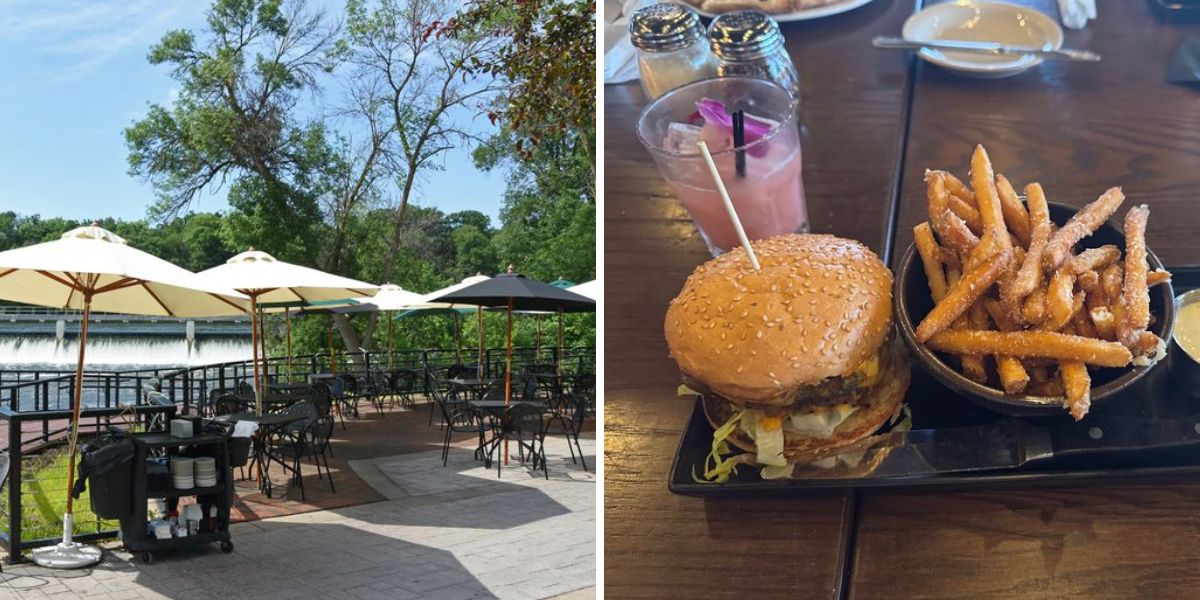
An Appleton eatery sitting inside a converted hydroelectric plant on the Fox River is drawing attention for a burger built entirely around one ingredient decision: where the beef comes from.
At Fratello’s Waterfront on West Water Street, the kitchen doesn’t blend suppliers or rotate vendors for its signature burger. Every patty traces back to one operation — Drath Family Farm, a third-generation cattle and ginseng farm roughly 30 miles away in Ogdensburg, Wisconsin, that switched from dairy to full-blood Wagyu production back in 2013.
One Farm, One Patty, No Shortcuts
Full-blood Wagyu is a different commitment than most restaurants make. The cattle take close to 30 months to mature before they’re ready for butchering, compared to the 18-24 months typical of standard beef cattle. That extra year matters — it’s what allows the marbling to develop that separates Wagyu from a regular ground-beef patty.
Drath Family Farm has built its reputation on refusing to cut that corner. The farm’s cattle are DNA-traceable back to Japanese bloodlines, the same genetic line associated with Kobe and Miyazaki beef, and the farm has been explicit that a lot of beef marketed as “Wagyu” around the country is actually a cross-breed — not the full-blood product they raise on a few hundred acres outside Ogdensburg.
For a restaurant, that sourcing choice isn’t just a marketing line. It shows up in texture and fat content that a chef can’t fake with seasoning or technique.
The Toppings Are Doing Less Than You’d Think
What’s notable about the burger’s build is restraint. Instead of stacking on ingredients, the kitchen limits itself to two additions: a caramelized onion bacon jam and a wedge of BellaVitano Merlot, a Wisconsin-made cheese aged with wine-soaked rind that adds a faint fruit note without turning the plate into a novelty.
That’s a smaller ingredient list than most “gourmet burger” builds, which tend to pile on five or six components to justify a higher price point. Here, the fewer additions seem intentional — nothing competes with the marbling in the meat itself.
The Building Has Its Own Backstory
Fratello’s occupies a former hydroelectric plant that once helped power Appleton’s industrial riverfront. The exposed brick and structural bones of the original building are still part of the dining room, and floor-to-ceiling windows look directly out over the Fox River — a detail that’s arguably done as much for the restaurant’s local reputation as anything on the menu.
It’s a pattern showing up across the Fox Valley region: old industrial buildings along the river being converted into dining spaces rather than torn down, with the exposed brick and original architecture treated as a selling point instead of something to renovate away.
Why It Matters Beyond One Burger
Drath Family Farm has said its Wagyu supplies roughly a dozen restaurants and retail outlets across central and eastern Wisconsin, from Milwaukee to Wausau to Appleton — but the farm’s owners have also noted that most of their business actually comes from individual customers buying beef directly, not restaurant accounts.
That’s a detail worth noting for anyone assuming a “farm-to-table” label is mostly branding. In this case, the restaurant relationship is a small slice of a farm operation that’s largely built on direct sales — which suggests the sourcing claim on the menu isn’t just decoration.
Where to find it: Fratello’s Waterfront, 501 W Water St, Appleton, WI 54911.