BALTIMORE, Maryland — When temperatures soar past 100 degrees, most people head straight for the air conditioning. But what about 1,800 zoo animals?
The Maryland Zoo has a full set of heat protocols to keep every single one of them cool and healthy — and the methods look very different depending on the species.
Red Pandas Stay Out of Sight
If you visited the zoo on a sweltering day, you would not see a red panda anywhere near the outdoor exhibit.
That is by design. Red pandas naturally live in cold climates, so the zoo gives them air-conditioned indoor spaces, shaded areas, and temperature-controlled water bowls.
“The first choice the animals have is whether to be outside or inside where it’s cool and air-conditioned,” said Mike Evitts, Director of Communications at the Maryland Zoo.
He also explained why shade alone is not enough for most animals.
“Unlike people, most animals do not sweat. They deal with heat by drinking water, panting, lying still, and staying in the shade to keep their body temperature low,” Evitts said.
African Elephants Have Their Own Tricks
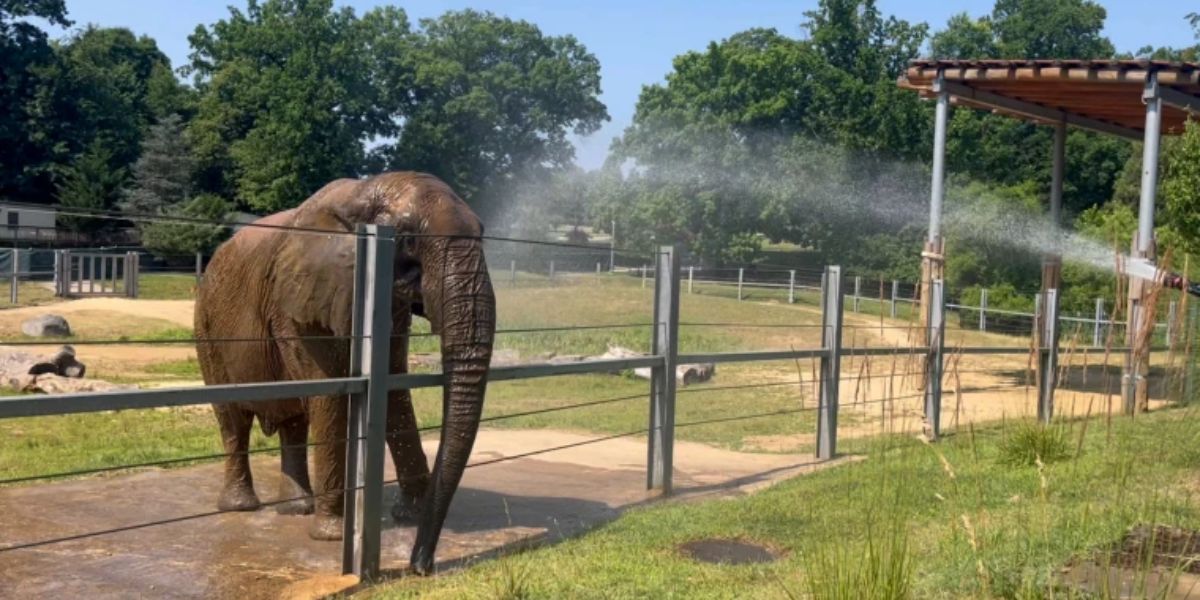
African elephants are built for warmth — but the zoo still pulls out the water cannon on the hottest days.
Tuffy, a 44-year-old elephant, was spotted enjoying a full water cannon spray during a recent heat wave.
Keepers also let elephants roll in sand and mud, which works as both a natural sunscreen and bug repellent.
And when elephants flap their ears? That is not just a habit. They have large blood vessels behind each ear, and flapping can drop their body temperature by up to 10 degrees.
Otters Just Swim All Day
For the otters, the answer is simple — stay in the water.
The zoo provides a large pool with waterfalls, open swimming areas, and sandy shore space. Ventilated hollow logs give them a dry, cool place to rest when they need a break.
What do you think of how the zoo is keeping its animals safe this summer? Share your thoughts in the comments.